The project is part of the Community Ecologies workshop: a hands-on workshop exploring the ground beneath Bethnal Green Nature Reserve and learning how to help it thrive.
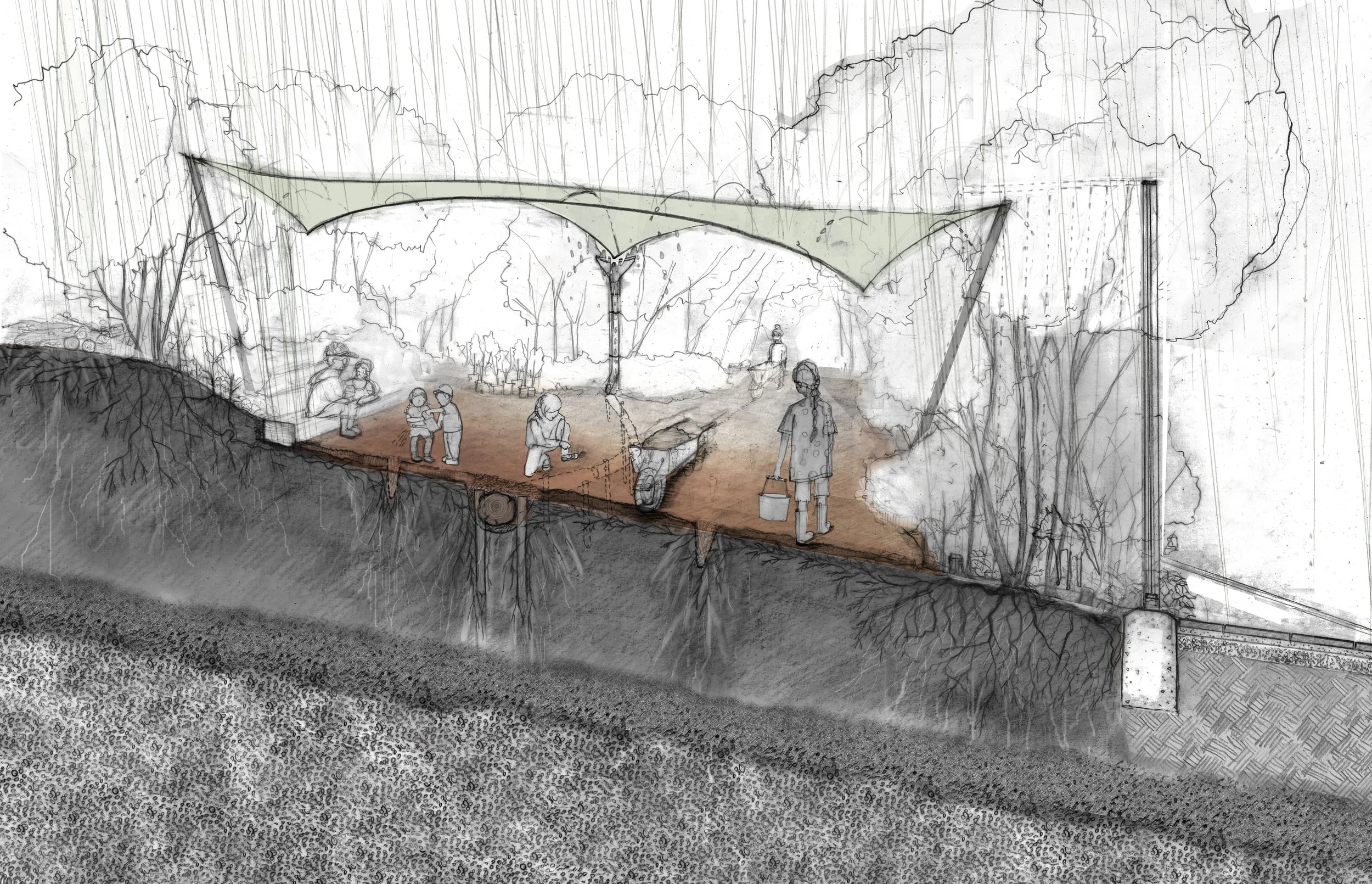
One area of the nature reserve stopped receiving rainfall when a permanent canopy was installed. The canopy gave us a shelter from rain, but the ground have become dry and dusty—combined with the pressure from a long spell of no rain and heat waves, some of the surrounding elder tree canopy started to die back.
The project, in collaboration with Edward Simpson (the site manager of the Bethnal Green Nature Reserve), explored a way of giving the water and life back to the ground.
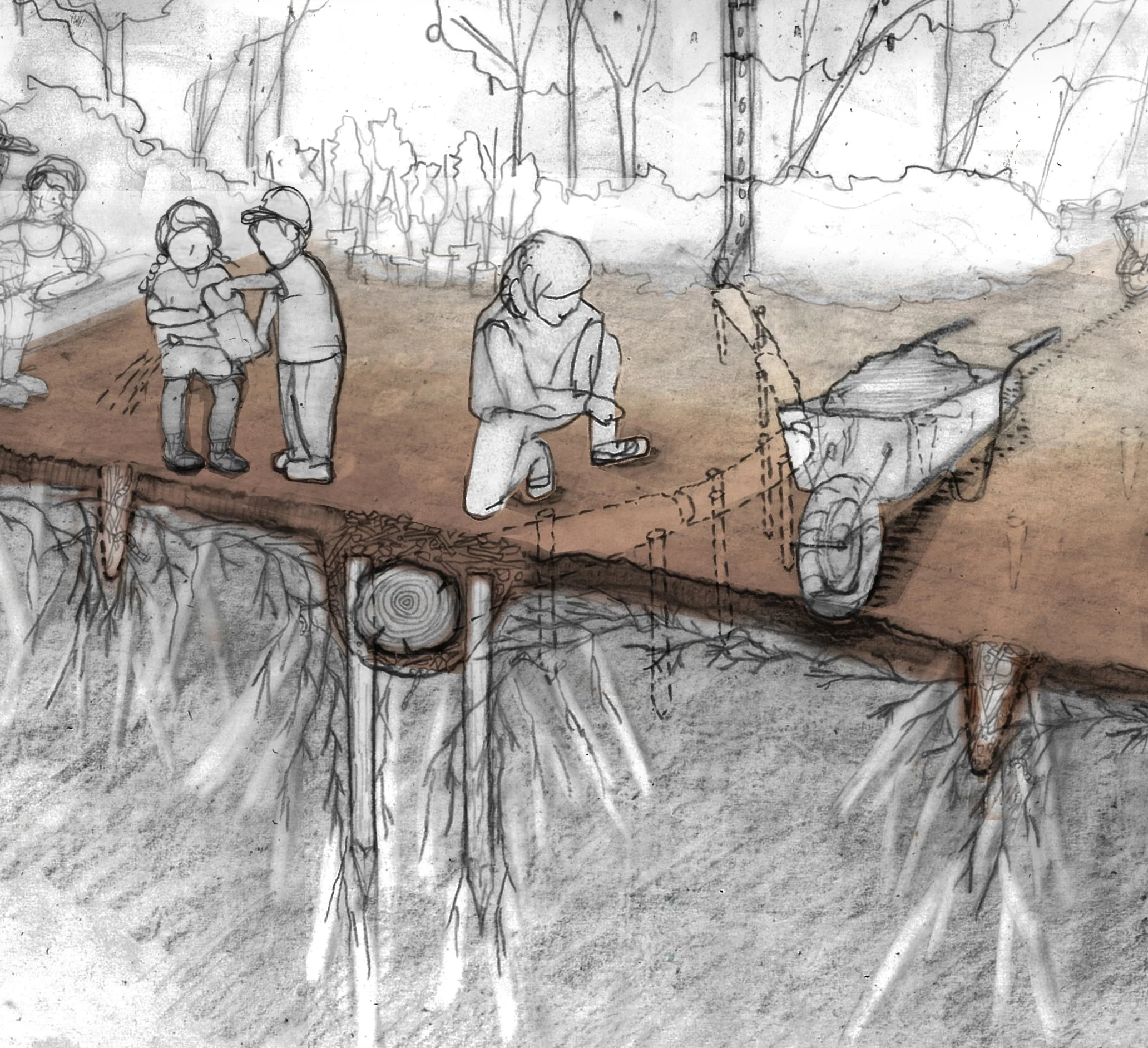
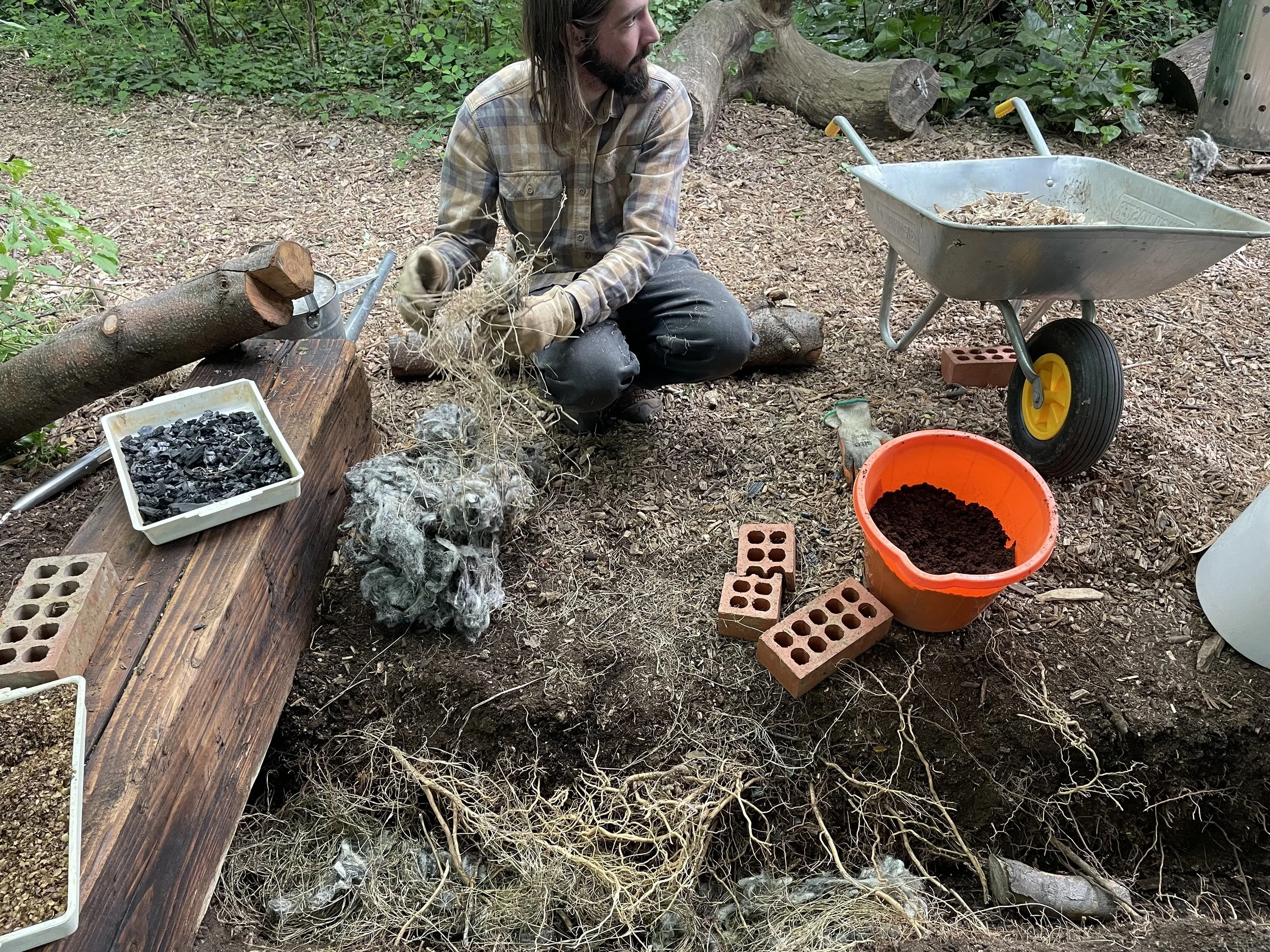
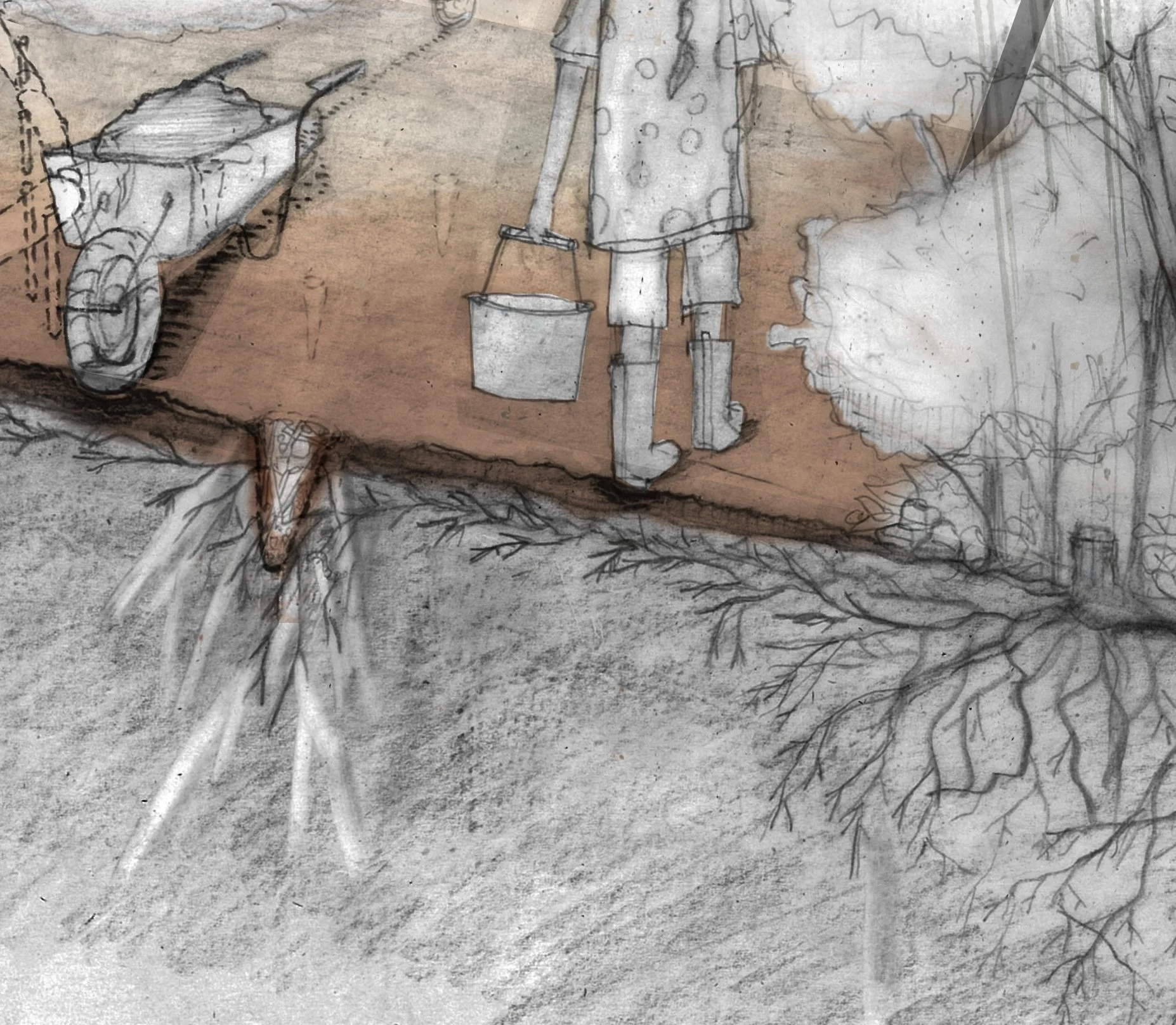
We built a log drainage channel to collect rainwater run-off from the canopy, allowing water to percolate slowly through the ground and move it towards the driest area at the centre of the site.
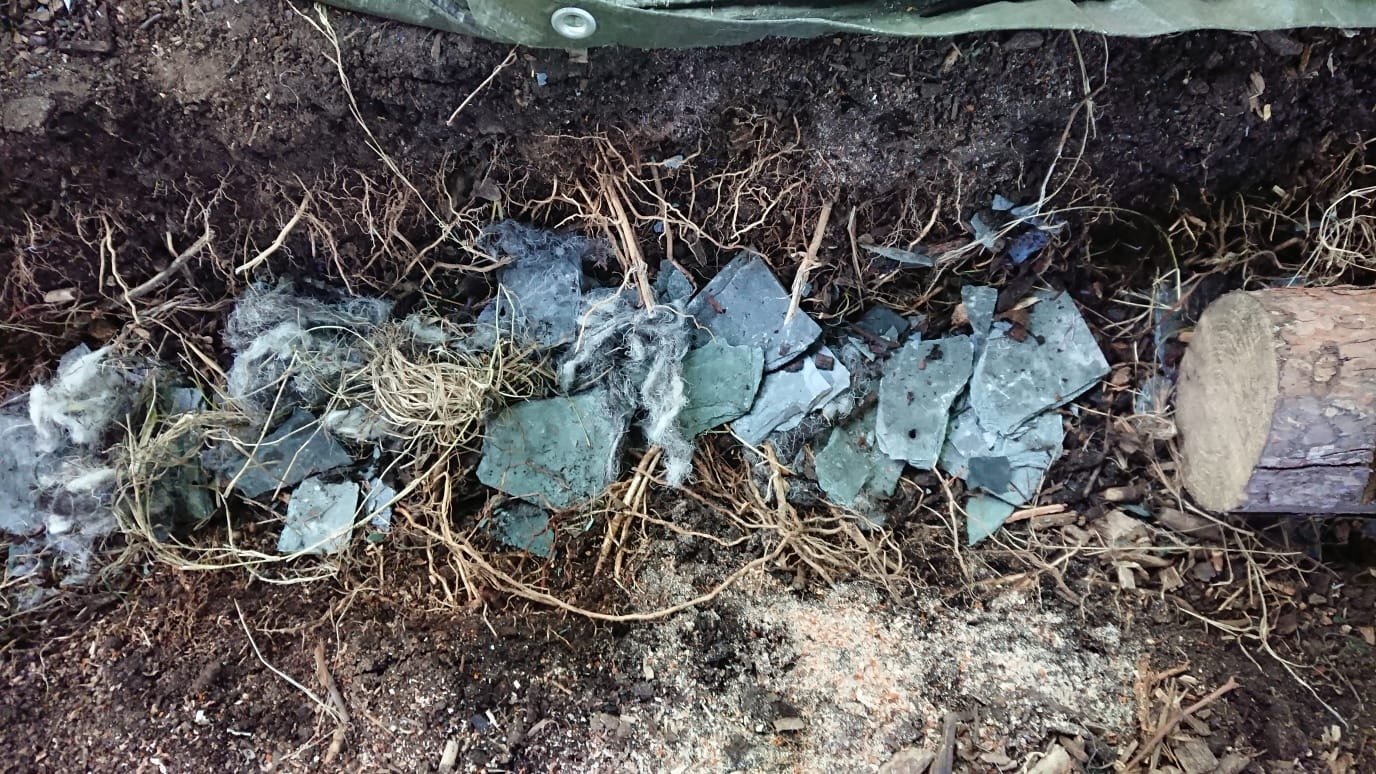
The drainage channel functions as an underground corridor for both air and water movement, filled with compostable organic matter that nourishes the below-ground ecology — including mycelium, microbes, and earthworms.
Over time, this helps regenerate a healthy living soil ecosystem, enabling tree and plant roots to access the air, moisture, and nutrients they need to thrive.
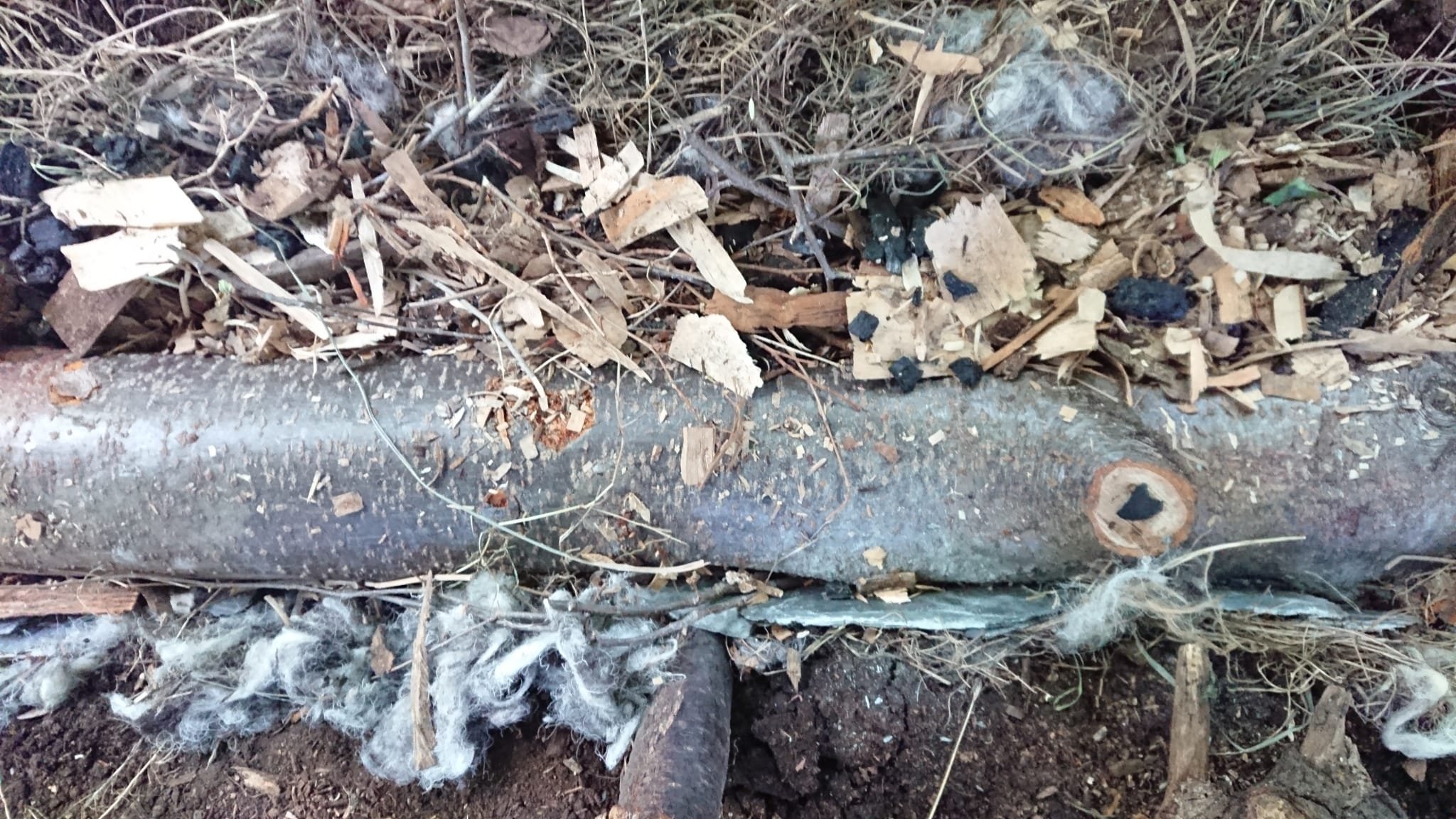
The materials we barrowed in the ground are natural materials mainly sourced from a network of hyper-local collaborators. The woodshavings were collected from London Green Wood, and the coffee chaff and spent coffee grounds from La Tostadora Roastery. Other materials include: biochar from Sayitwithwood, found roof slate tiles and bricks, wool. Straw inoculated with mycelium spores, twigs/logs/leaves were collected from in and around the Bethnal Green Nature Reserve.
1. Hand-dug a channel with a slope towards the centre of the site.
2. Sprinkled a layer of biochar.
3. Laid a layer of decomposable blanket made of woven straw, wood shavings, wool and fallen leaves inoculated with mycelium spores mixed with slate stone pieces.
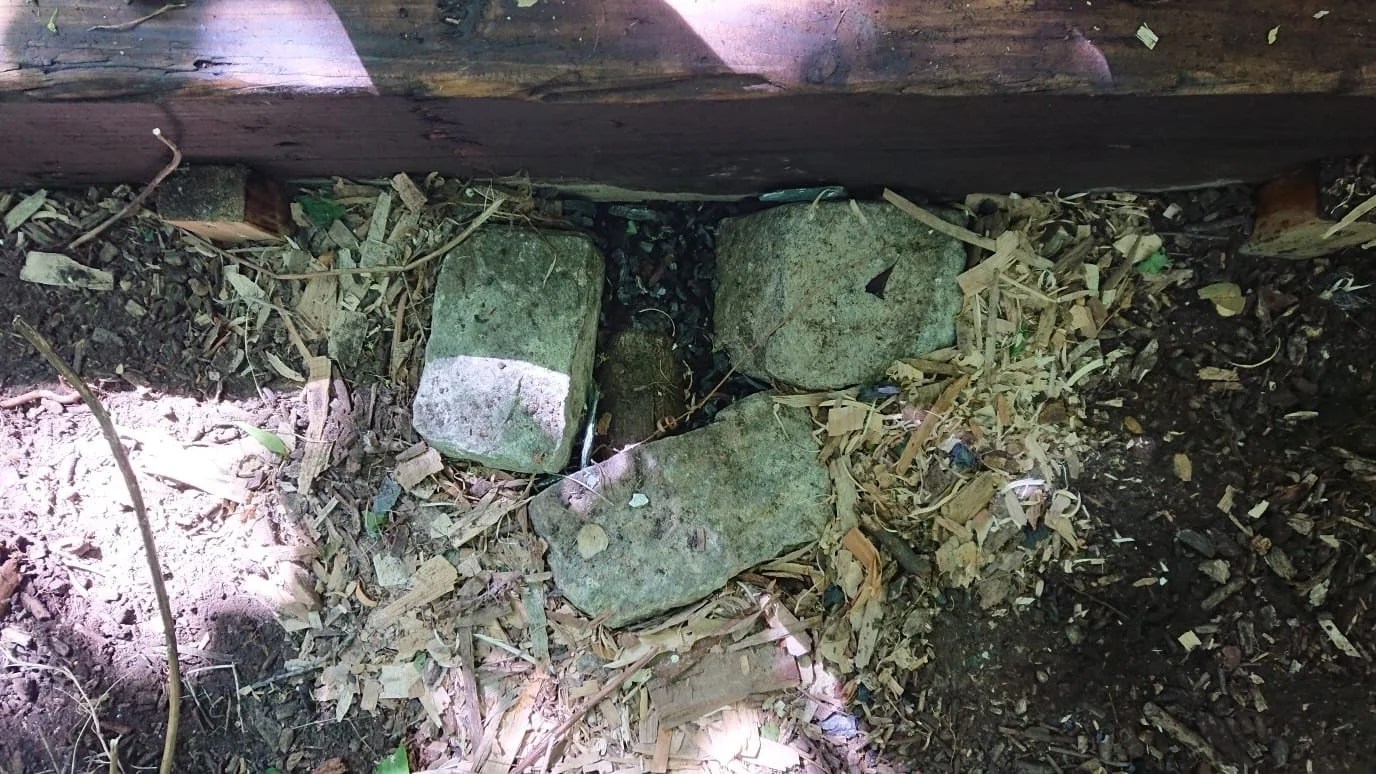
4. Buried logs (with the tree bark on) and pegged them in with timber piles.
5. Filled the remaining gaps with the decomposable blanket and biochar.
6. Topped with tree branches mixed in with small slate stone pieces, finished with a layer of woodshavings and woodchip.
The method of reintroducing compostable carbon rich organic materials (that are readily available and found around us) is one way to de-compact and restore permeability and life back in the soil. Increasing the soil’s ability to retain and absorb rain water builds resillience towards draught/ extreme heat and sudden downpours as a result of climate change.
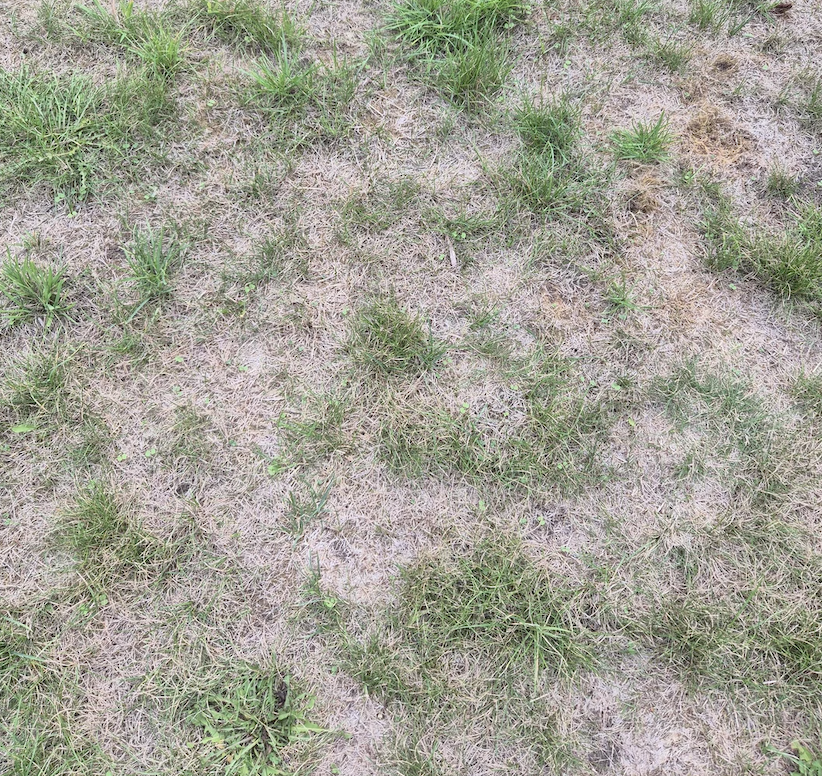
One common example of how our feet affect urban soil can be seen in many city park lawns. As people walk on the grass over time, the soil becomes hard and compacted, making it difficult for the ground to absorb and hold rainwater.
Further read: Cooney, Christy. “In pictures: England's bare lawns and parched parks.” BBC News, 6 August 2022
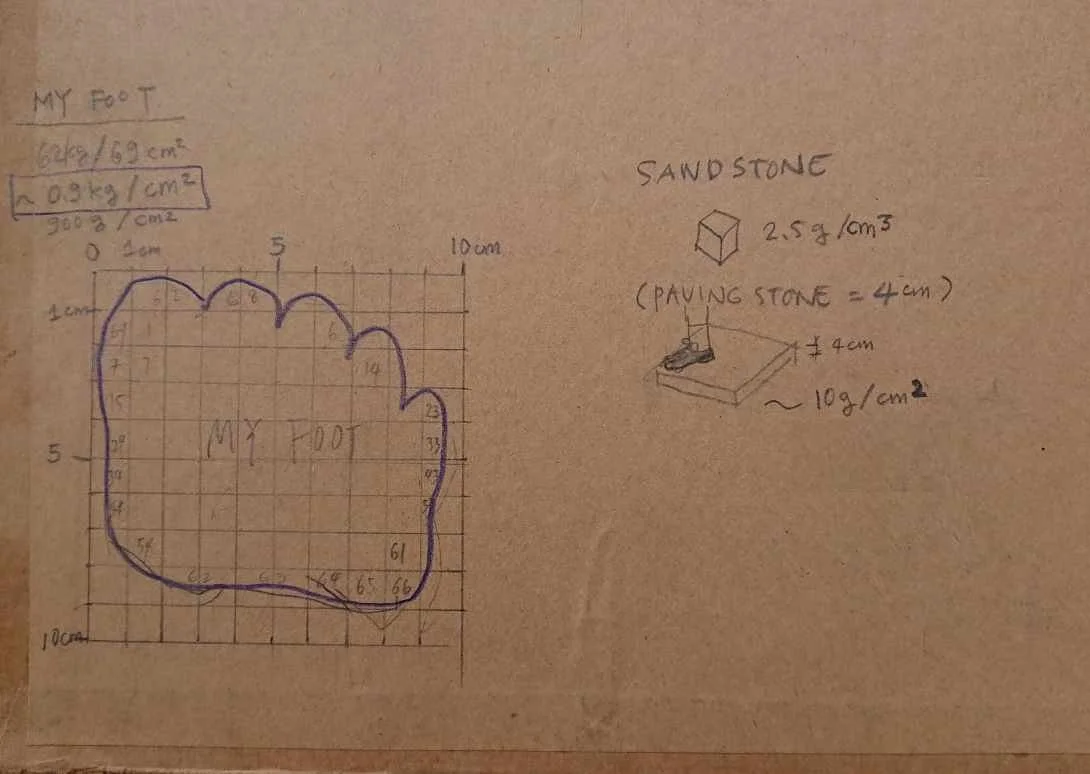
Each step we take weighs down the ground below us and compacts the soil — the physical pressure a human— for example; me, standing on the ball of my foot alone exerts 1kg of weight/cm2 on the ground. This is almost 9 times more than that of a typical paving stone! So in essence, we create more pressure downwards into the ground than a static —and what we imagine as being heavy—paving stone.
And of course, as we walk and run around, our static weight increases with the velocity.