Soil ecology in a city
A Collaboration with Bethnal Green Nature Reserve and Teesdale and Hollybush TRA
Soil Ecology in a City is a series of ongoing experiments exploring how the soil ecology of existing ground in and around local green spaces across East London can be improved.
The project is guided by the following questions:
“What are the practical methods of improving the permeability & soil ecology of existing ground?”
“What human social structures around the soil enable this transformation?”
Urban soils are often compacted, or sealed with man-made surfaces,
Struggling to absorb & retain rainwater.
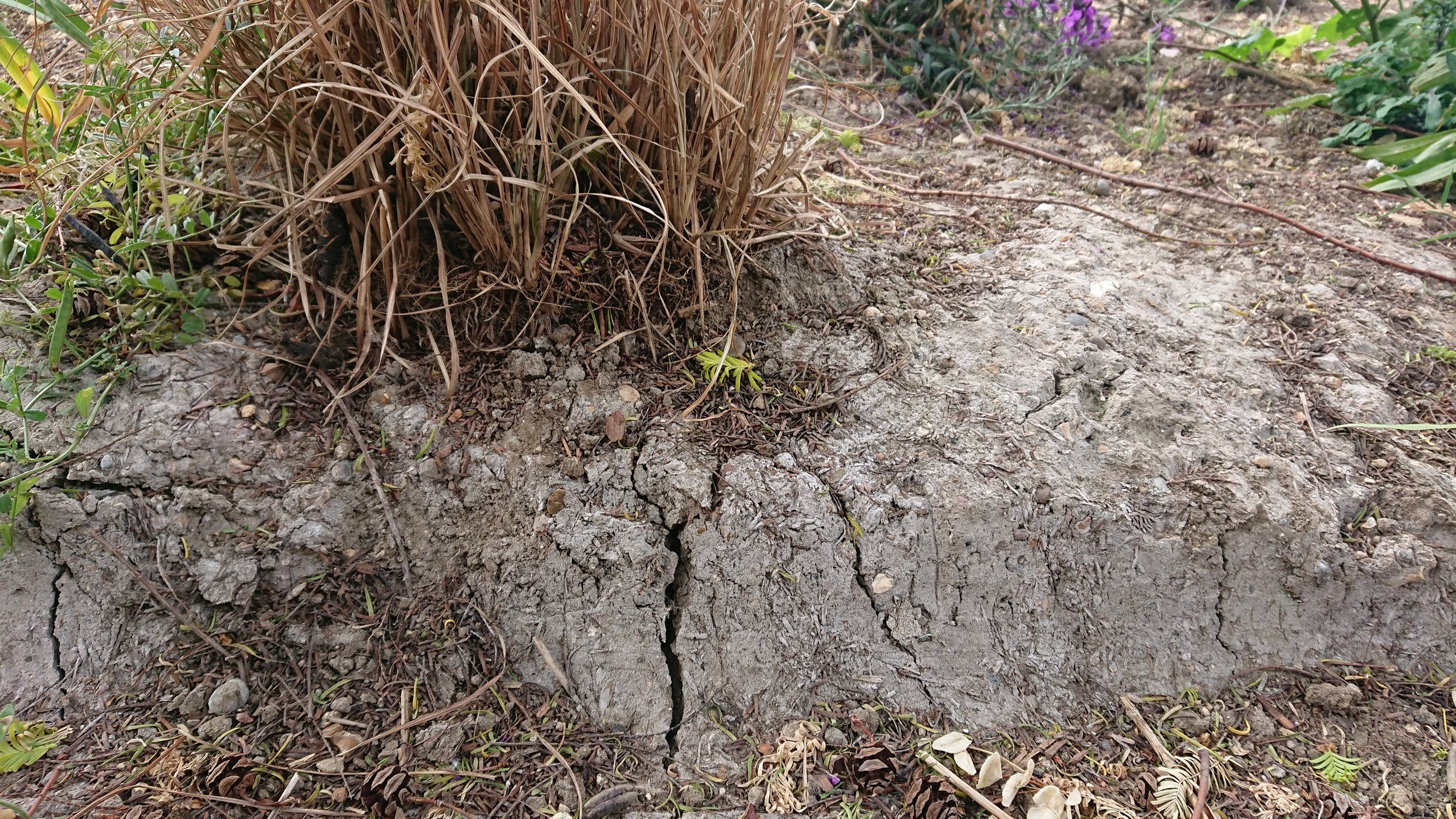
A photo of cracked soil in a planted bed near Rectory Road station, Hackney London_ April 2026
When the ground loses its capacity to absorb and retain rainwater, cities become more vulnerable to both prolonged dry spells and sudden downpours intensified by climate change.
Like humans, soil ecosystems need to breathe: soil-microbes, earthworms, mycelium, and the roots of trees and plants all depend on a healthy balance of air, water, and organic matter in order to survive and thrive.
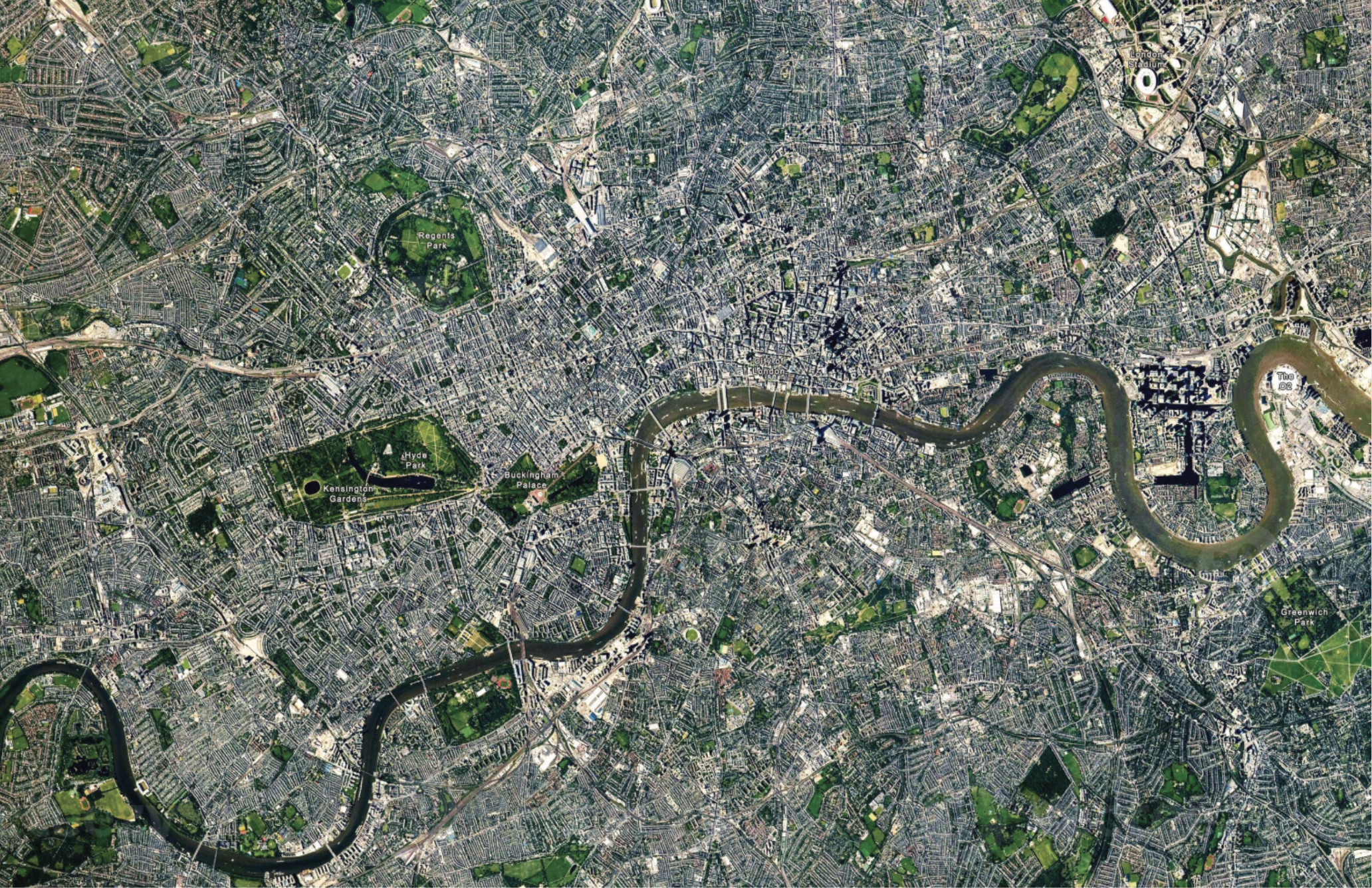
(Image Credits)
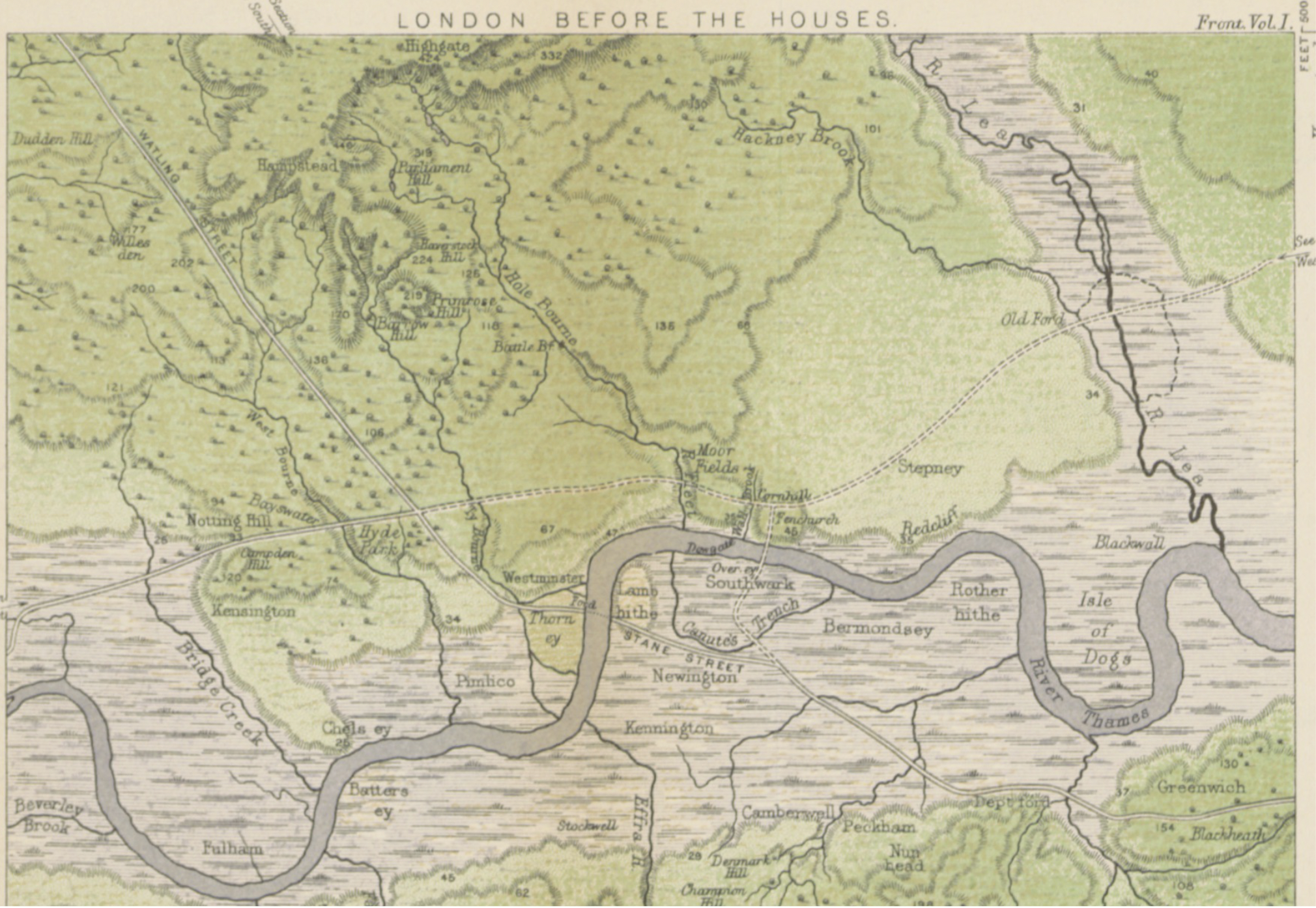
1st Map: A map drawn in reference to an imaginary landscape of London before urbanisation.
John William Loftie. A History of London. London: T. Fisher Unwin, 1884.
2nd Map: An aerial photograph of London © Googlemap 2025.
SOIL BEFORE & AFTER improvement works
@ ROCKY PARK COMMUNITY GARDEN
Rocky Park is a long-standing community garden cared for and managed by Teesdale and Hollybush TRA in Bethnal Green.
I have been part of the volunteer gardening team since 2019, primarily looking after improving the existing soil by making hand-dug barrows and turning the exisiting lawn area into in-ground planted areas.
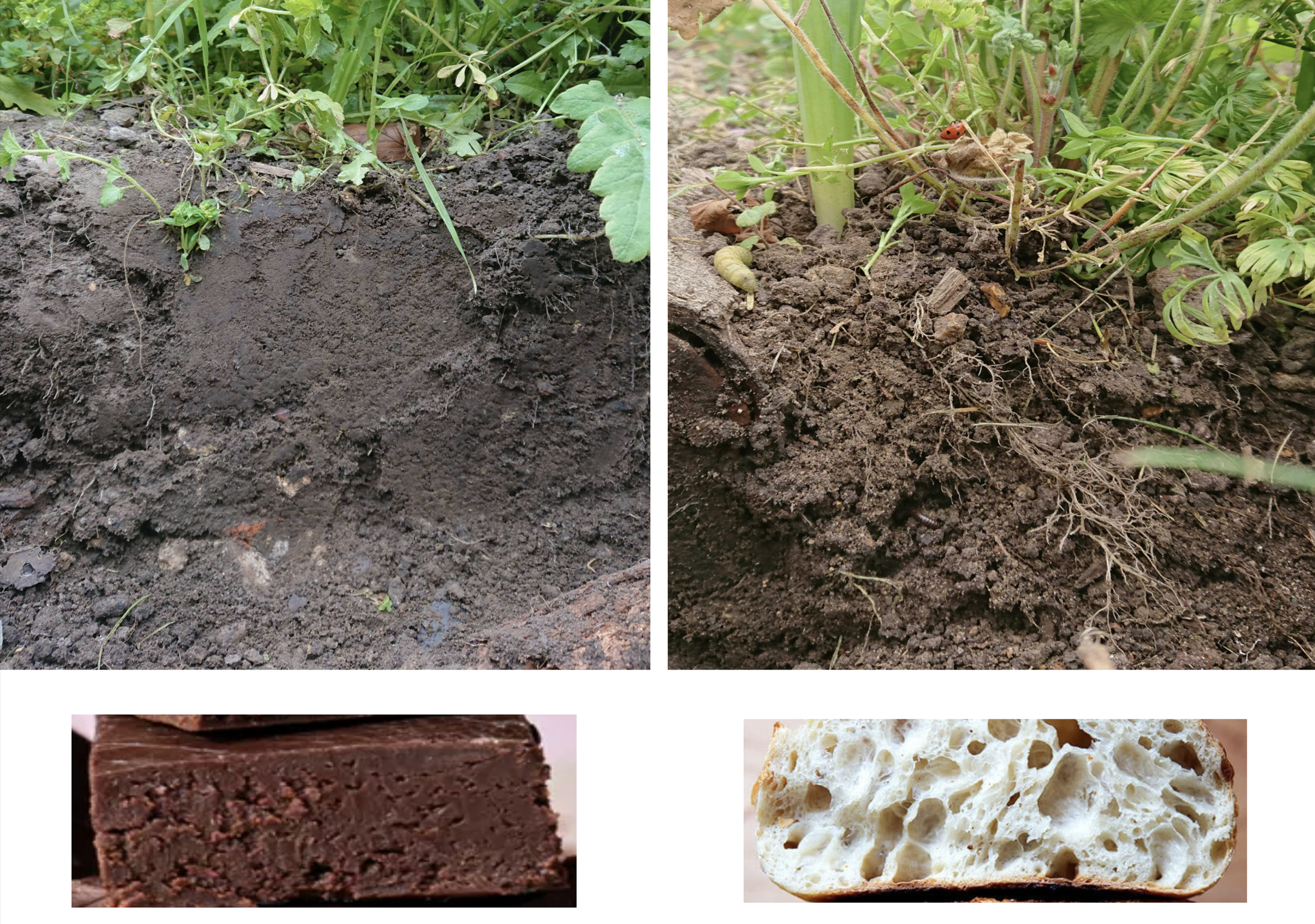
(left image)
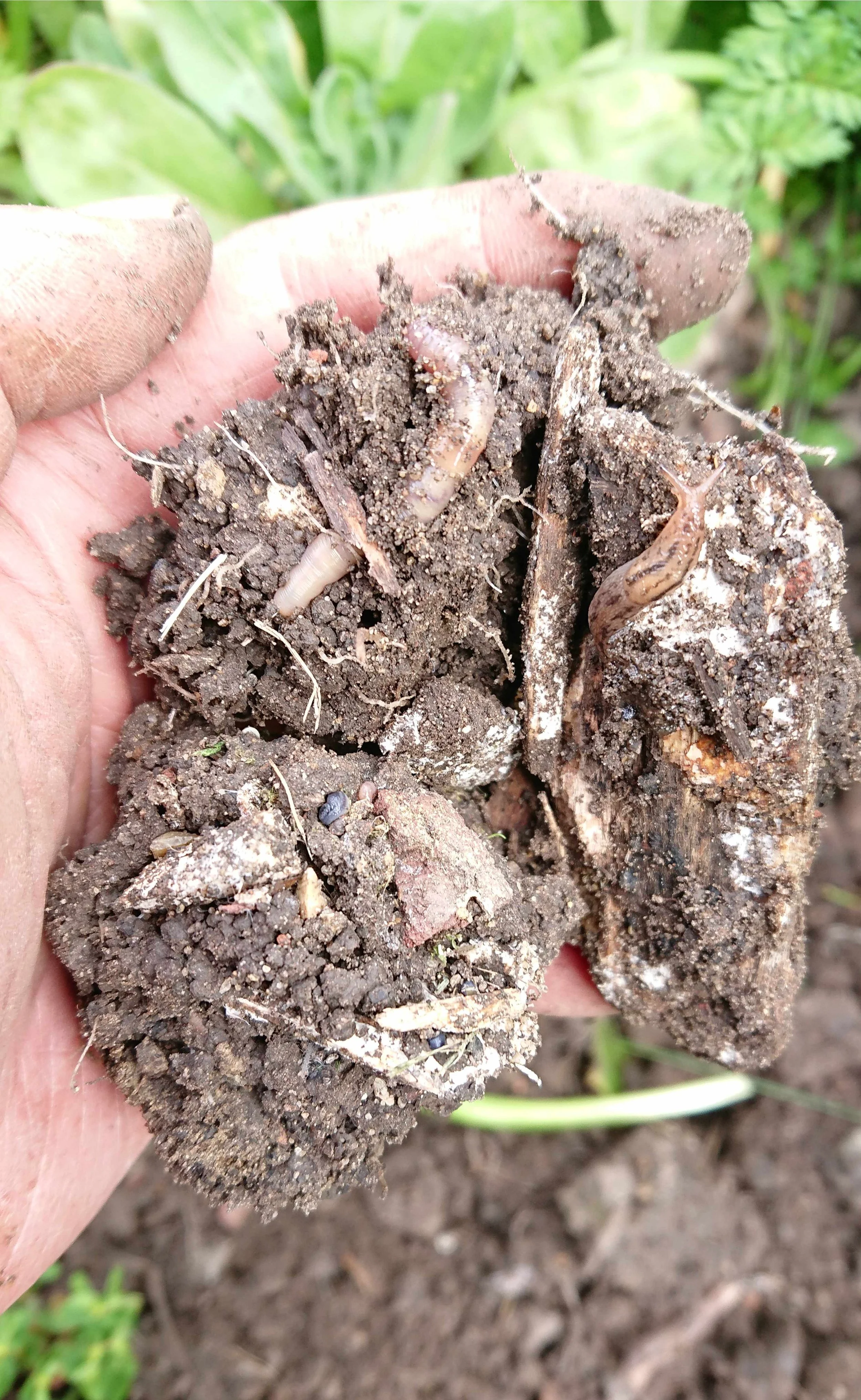
a fudge-like compacted soil with no earthworm, before hand-dug barrow soil improvement works.
(right image)
a sourdough bread like airy soil after 1 year.
A ladybug, earthworms, ants, centipede, caterpiller, woodlice within a 20cmx20cm soil area.
*Step by Step Process of Creating a soil improvent hand-dug barrow
with locally available Material links
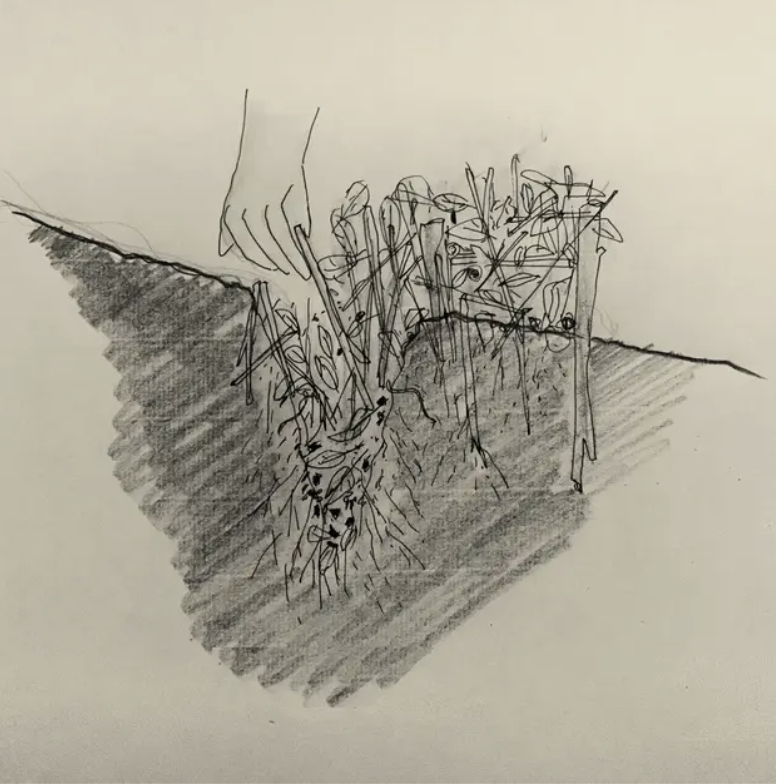
Observe the soil, poke around to see how the soil condition is. Is it dry, do you see any earthworms, how are the plants surviving?
Dig a hand-dug hole (a shovel size hole of at least 30 cm depth) or a seriese of smaller holes of min 30cm depth (using a long poker).
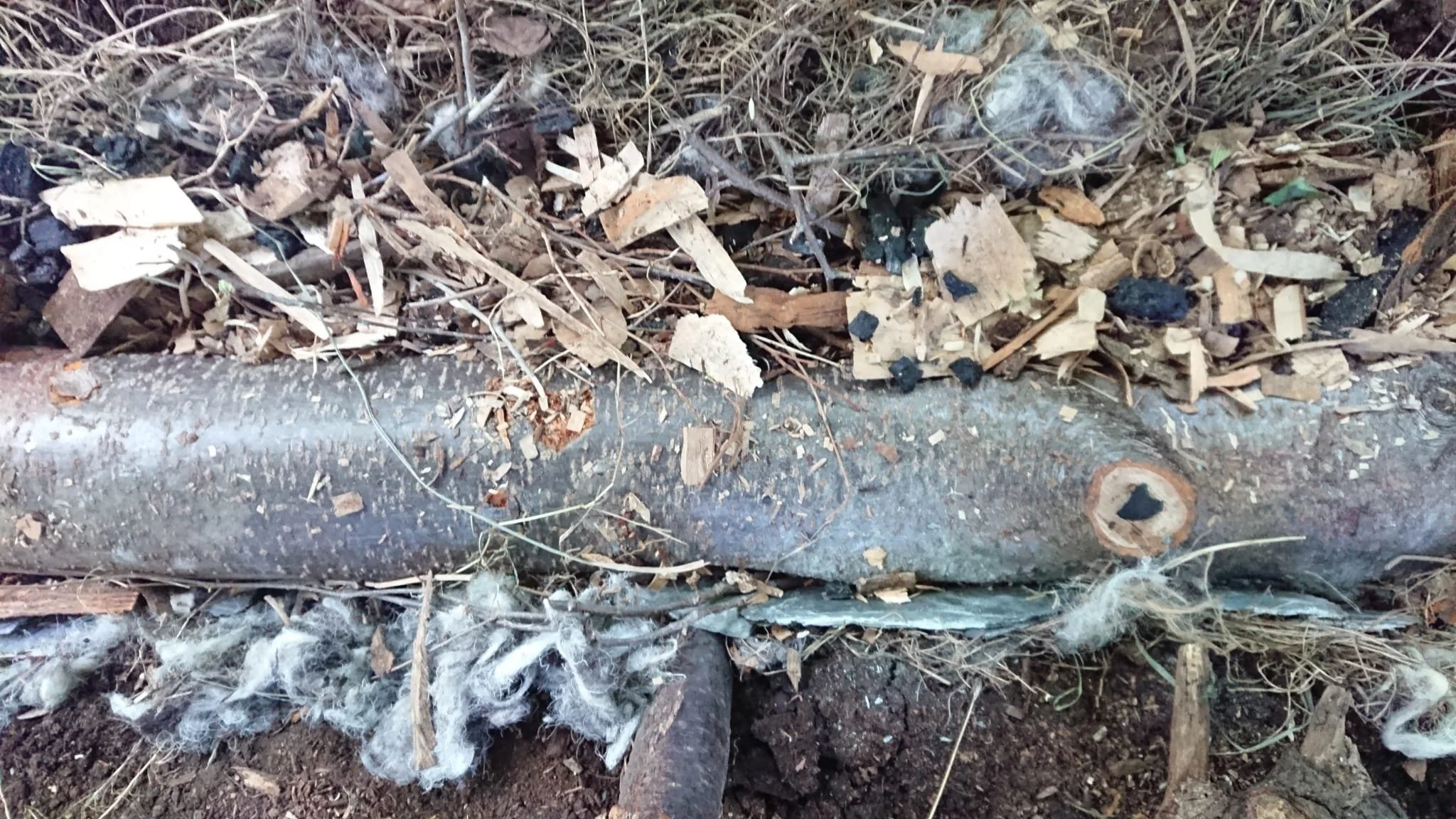
Fill the holes with any found materials that are compostable and carbon rich. i.e. tree branches, grass clippings, fallen leaves (better if already started composting) and sprinkles of bio-char.
Place a few rocks/logs/broken up bricks—anything that worms and insects would love to hide under—around the barrow.
If watering, water into the barrow, which allows the water to reach deeper depth and moisturise the barrow to encourage mycelium / soil-microbe growth.
Wait for a few months to a year.
Ways of Improving Soil Ecology workshop 1
@ Bethnal Green Nature Reserve
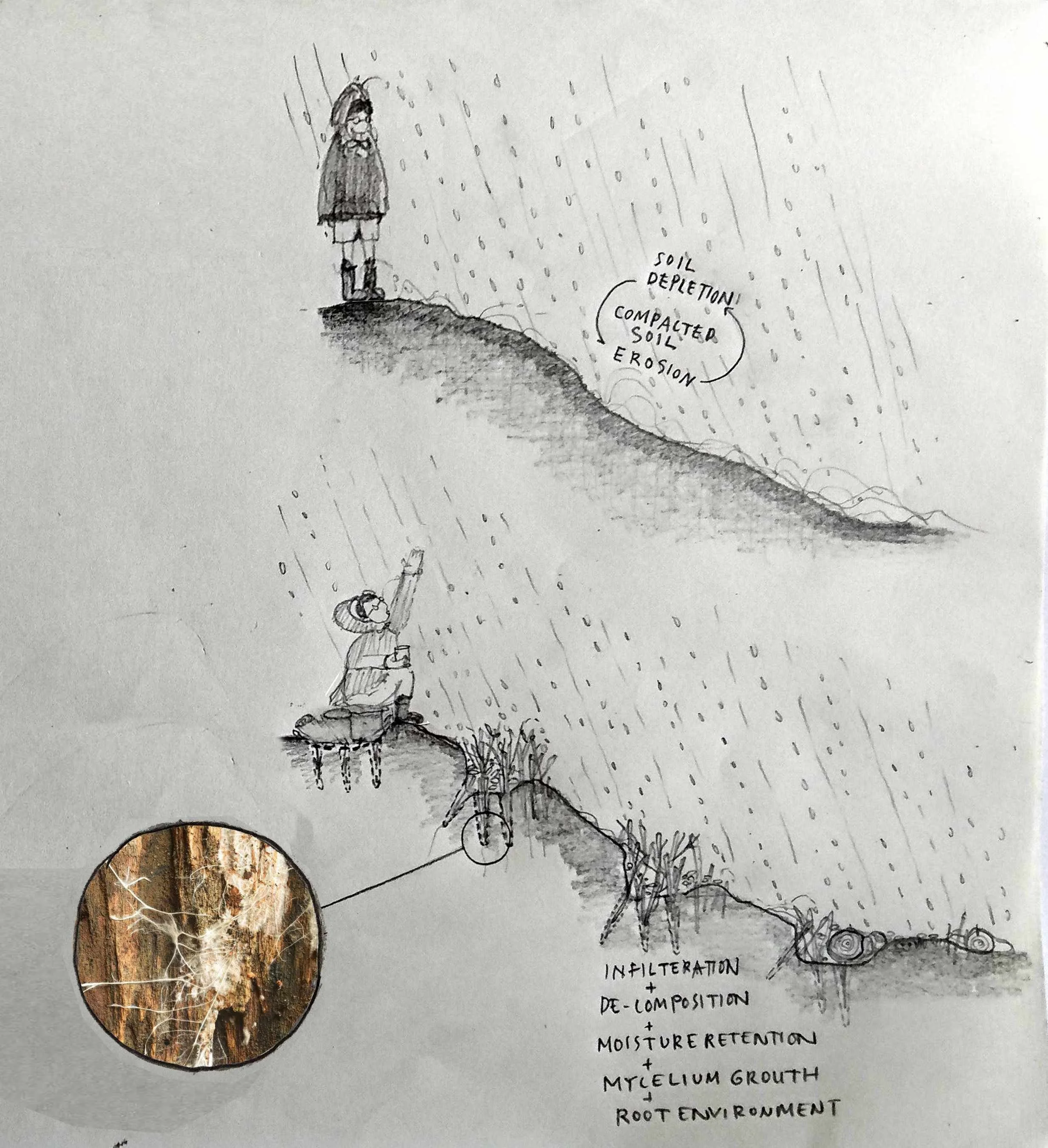
Community-led co-learning workshop at Bethnal Green Nature Reserve. The nature reserve was a WWII bomb affected site, hence parts of the ground contain rubbles. The workshop focused on one of the rubble mounds on site, where plants were not growing. The session introduced practical, simple techniques to improve soil ecology by creating air and water corridors and burrowing compostable plant materials into the ground—a vernacular land-stewardship method promoted by a Japanese Ecologist, Hiroomi Takada.
Before and After Photos
FINDING THE PATH OF WATER
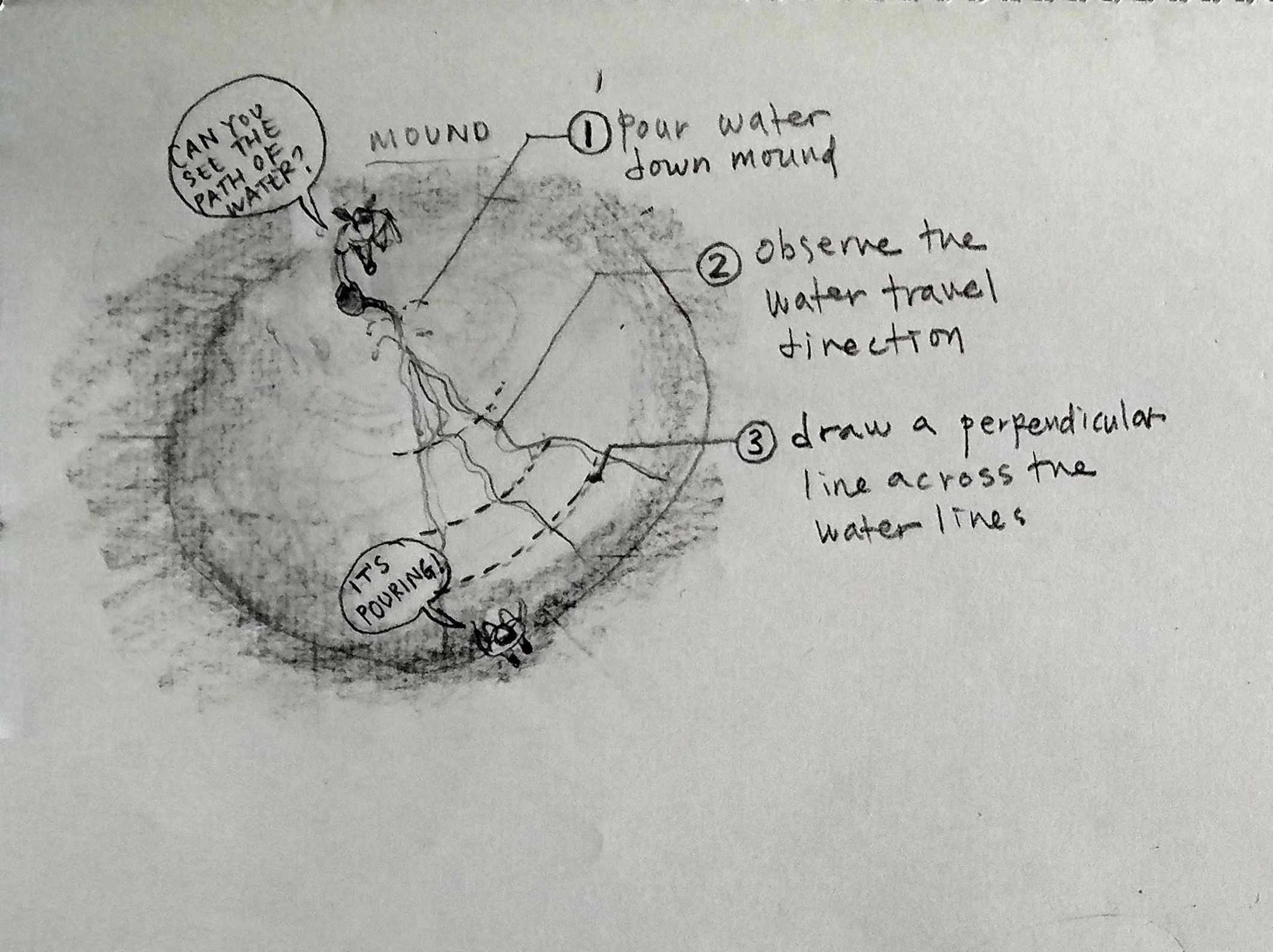
We first poured some water down the mound.
Observed how the water travels—simulating how rain water runoff travel down the mound.
Drew a few perpendicular lines across the water travel paths to use as a guide to dig in steps along the mound to capture rain water.
capturing the rain water with steps and hand-dug barrows
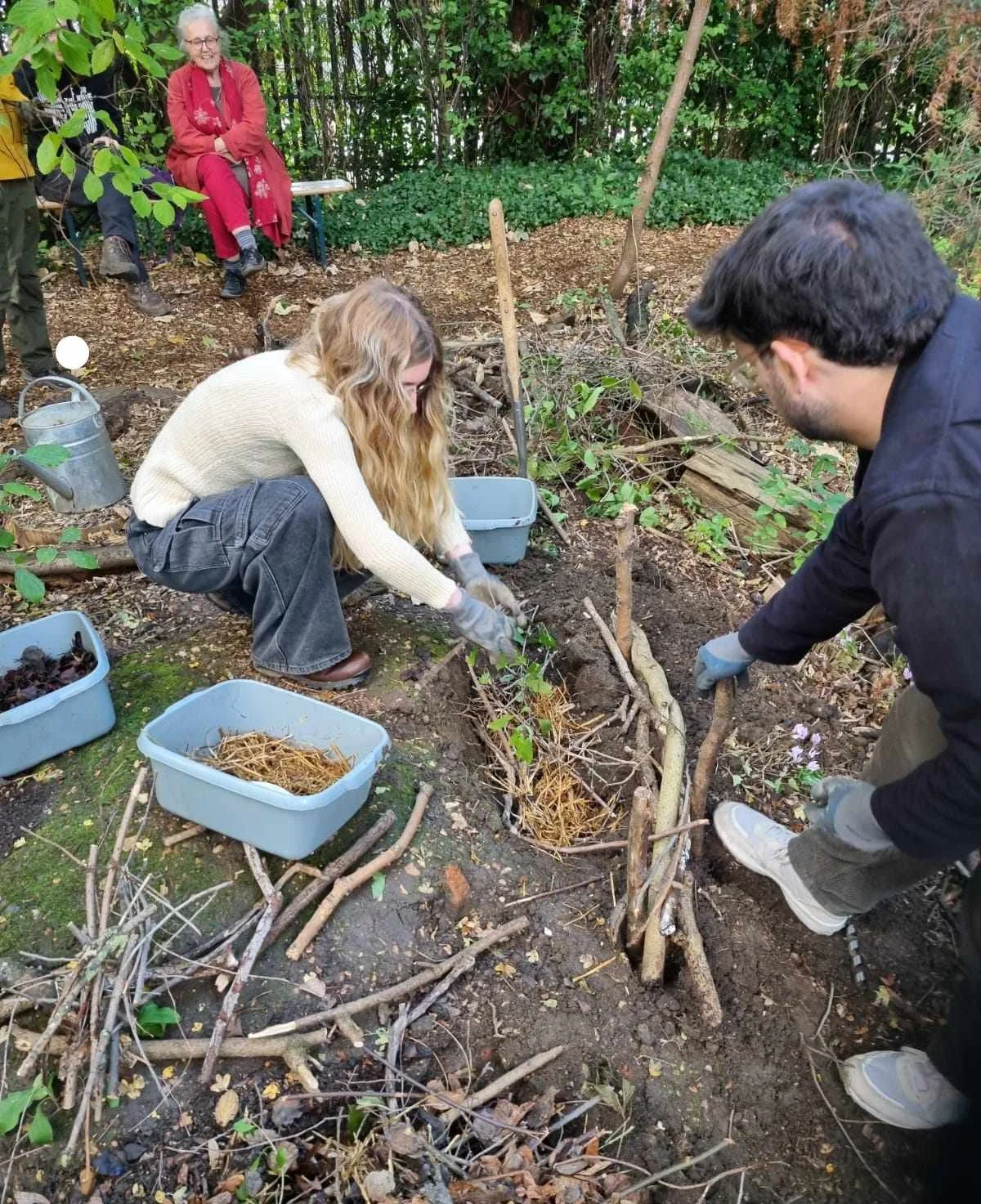
4. Humans moving like little woodland creatures making airy nests in the ground. They burrow straws inoculated with mycelium spores, fallen leaves, charcoal and tree branches, which give air and water spaces and food for soil-microbes, mycelium, earthworms and insects.
edge of barrows, protected with woven deadhedge with tree branches
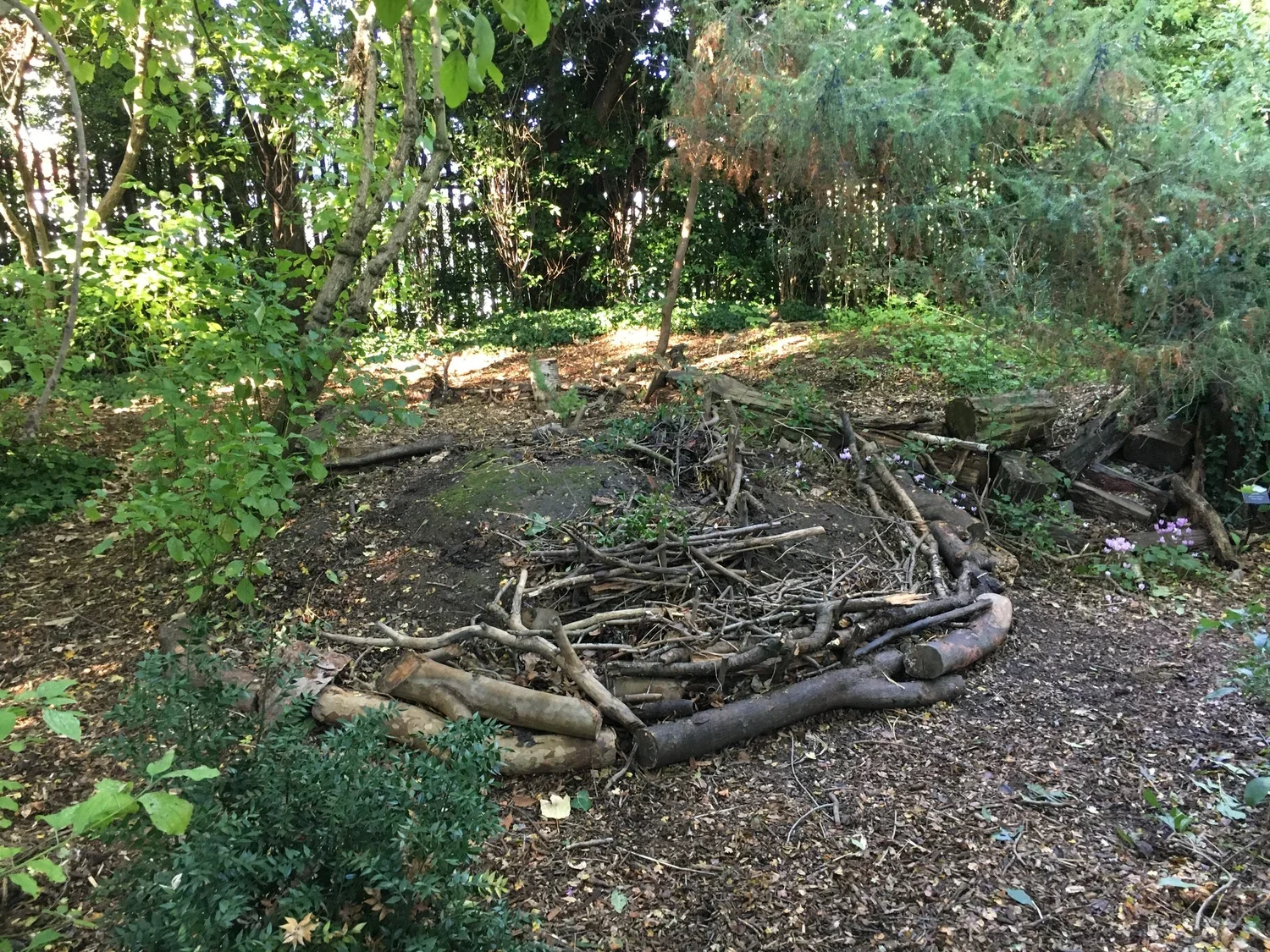
5. A photo after the workshop with steps, hand-dug barrows and deadhedge in front of the barrows.
From a bare soil mound to…..
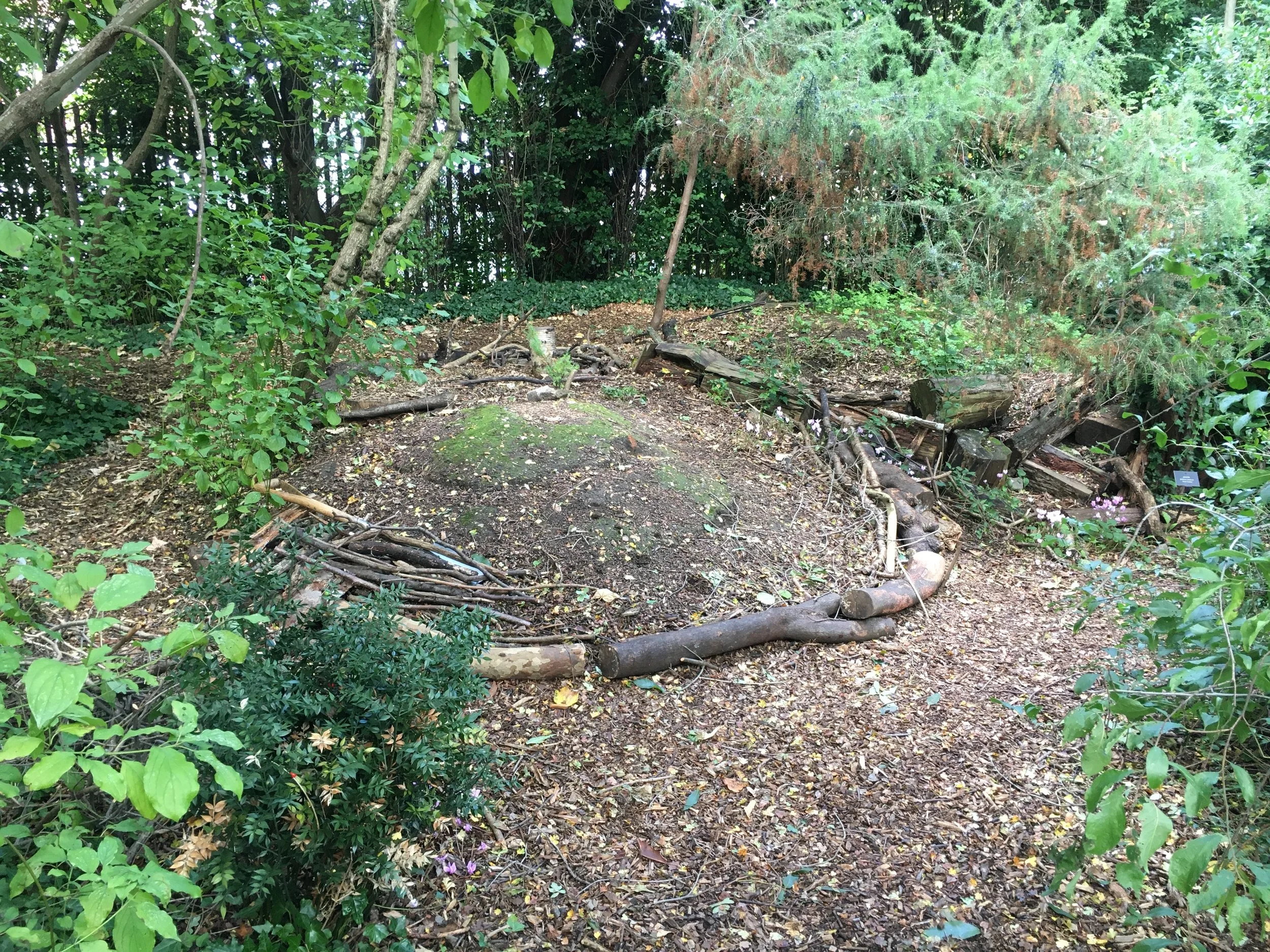
Barrows and dead hedges capture fallen leaves, forming a protective buffer layer that retains moisture and air above what was previously a bare soil mound.
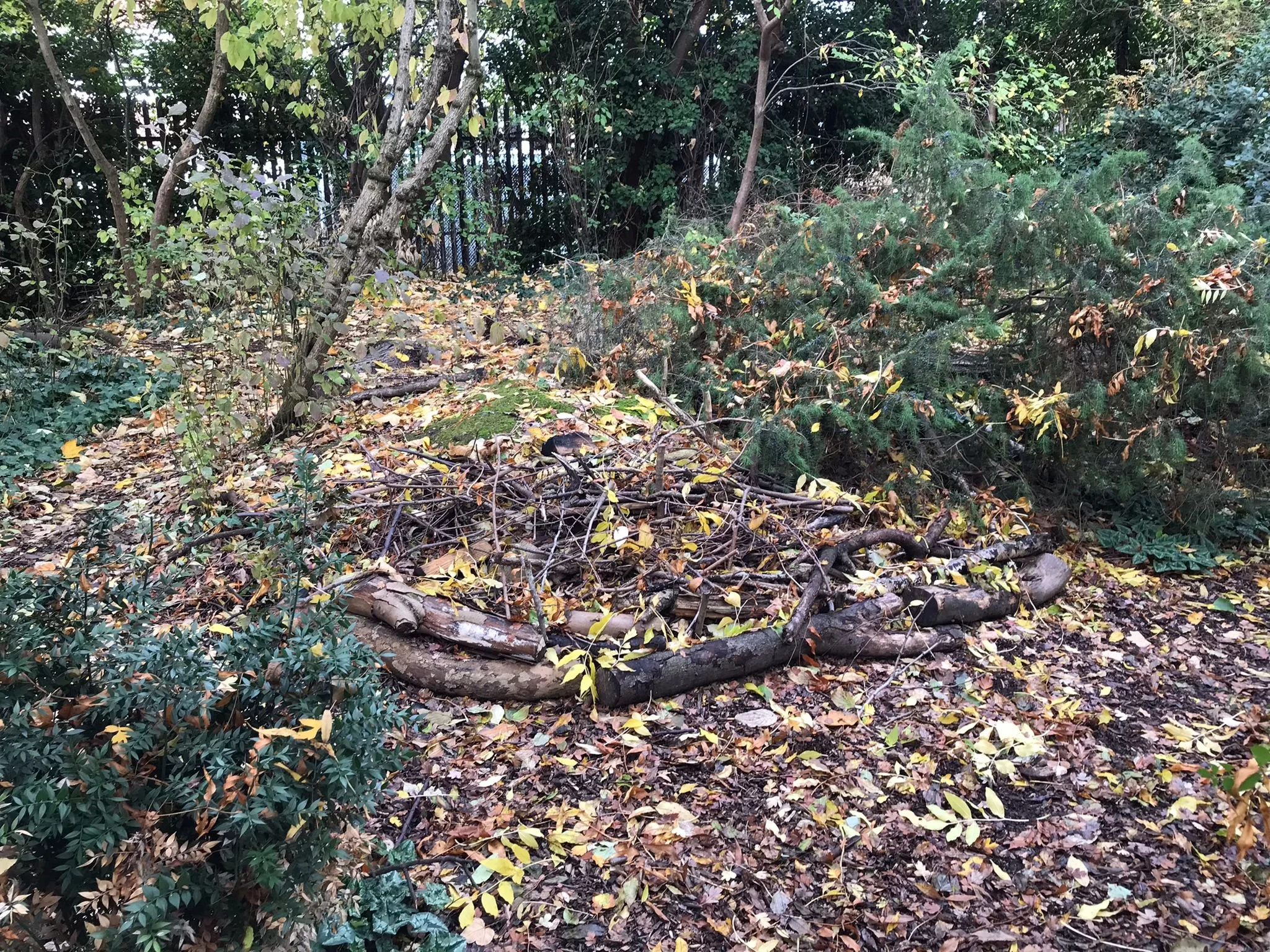
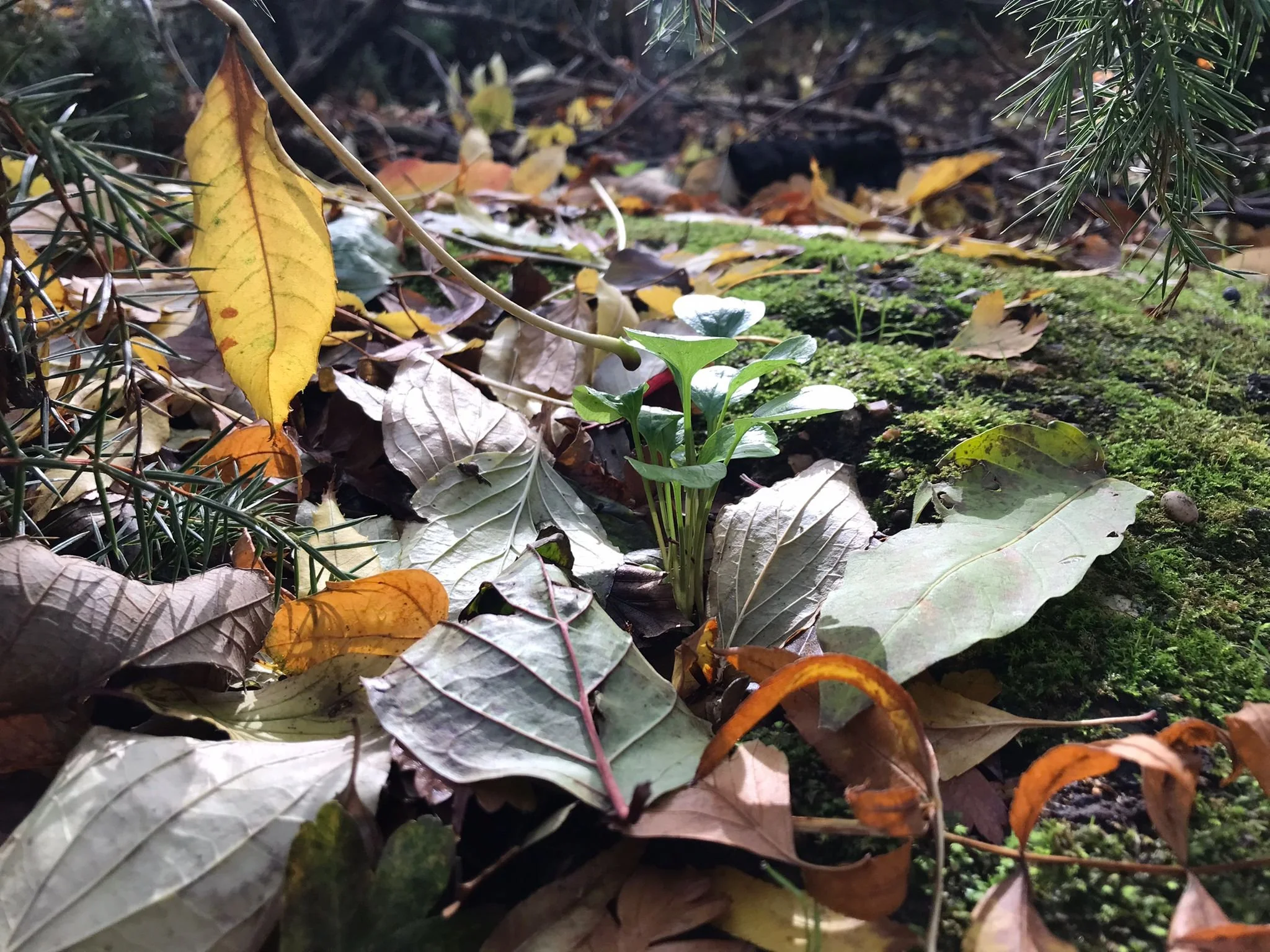
Sweet violet plant pokes up through fallen leaves.
Before & After photos of the mound
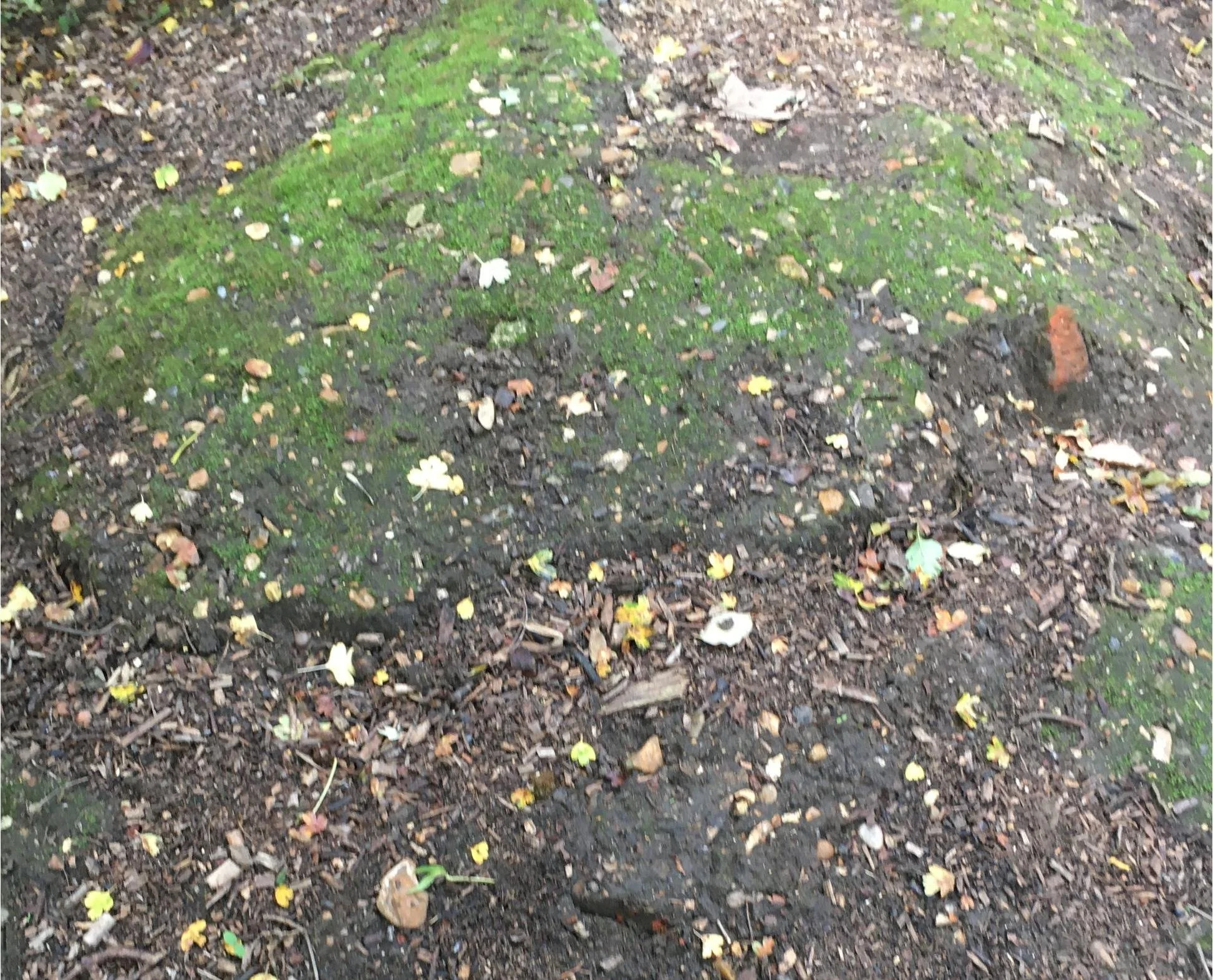
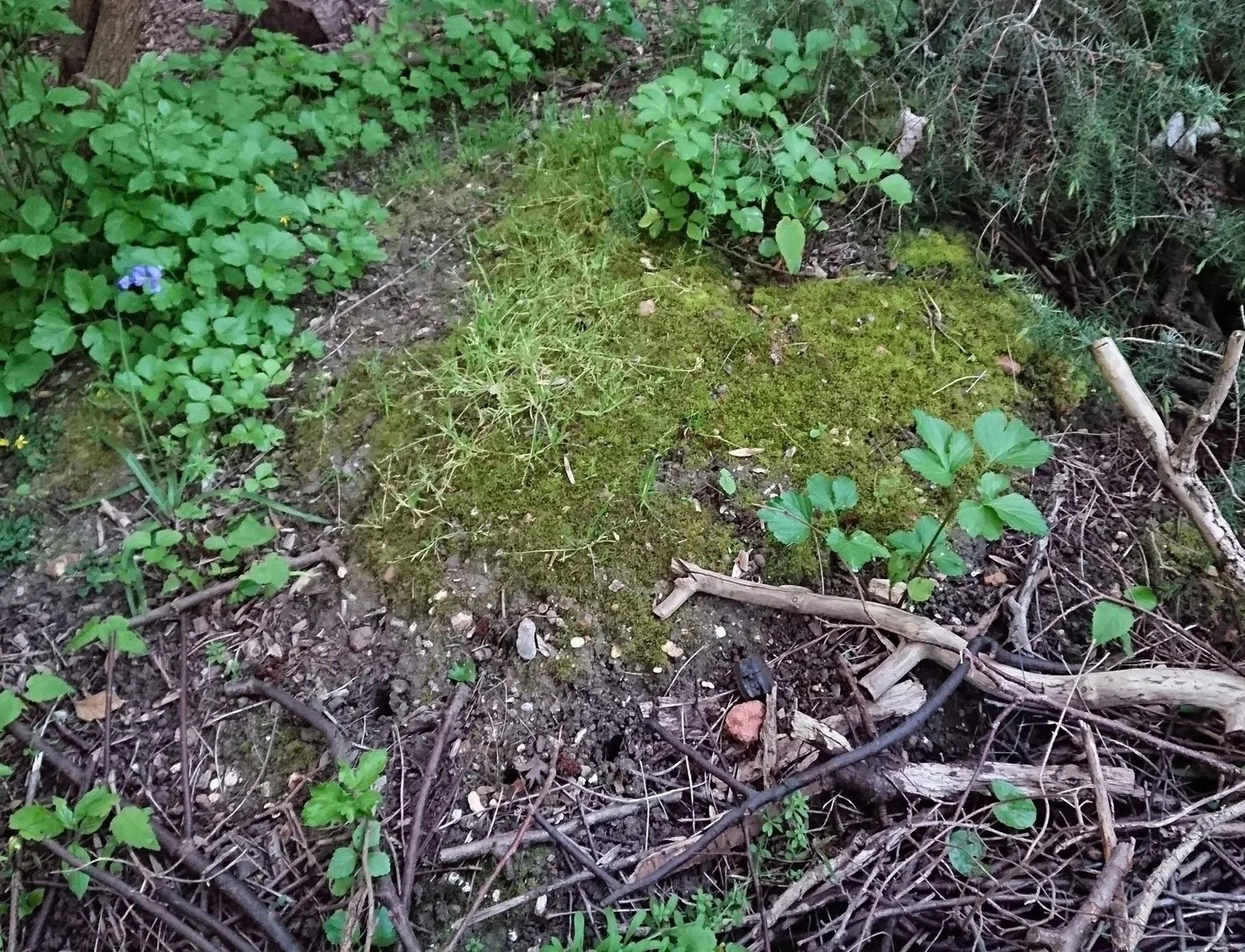
18 months after the workshop, grass, moss, bluebell, violet, alexander and sapling sprouts return.